


High Quality Education
It has been a busy start to the week. We began Monday morning with seminar at the university, UARM. After our seminar, we had the former minister of Education come and talk to us about the Peruvian school system and the history behind it. He told us that 30% of students don’t finish secondary school, which is like high school in the United States. However, for the students who do finish secondary school, they must decide at age 16 or 17 whether they want to continue to university and what they want to study and where. Many students who attend university have a pretty good idea of what they want to do, which is different from the United States where you can enter college undecided or multi-interested. He also talked to us about challenges that rural areas face due to the distance for teachers to travel and access to resources. While there is still room for improvement in the Peruvian school system, Martin informed us that it has improved a lot. The Peruvian school system is now in the middle-income group rather than low income.
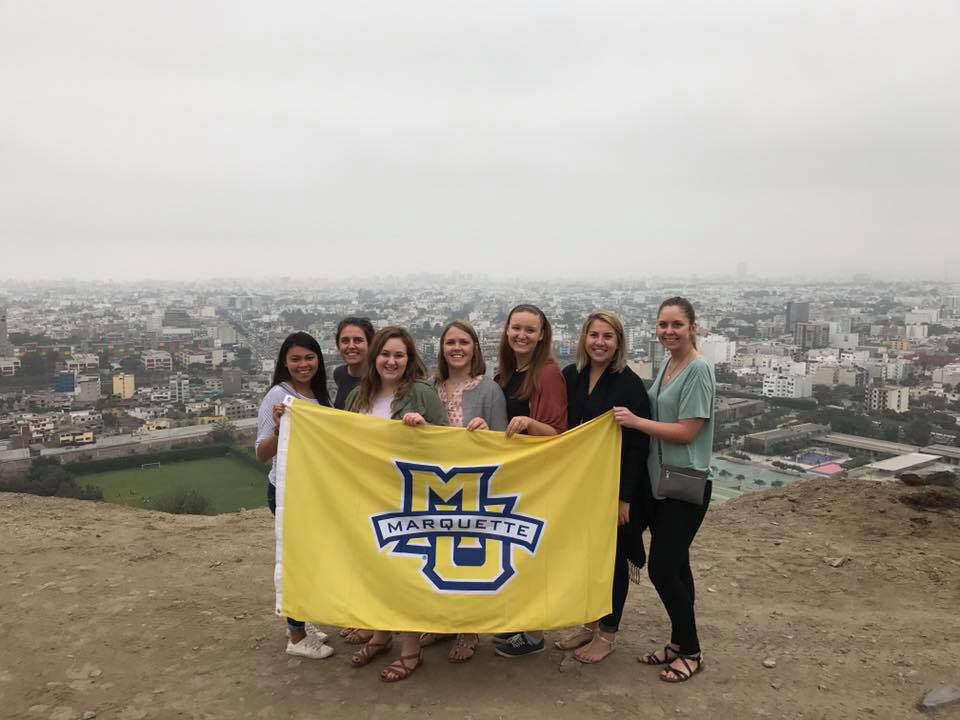
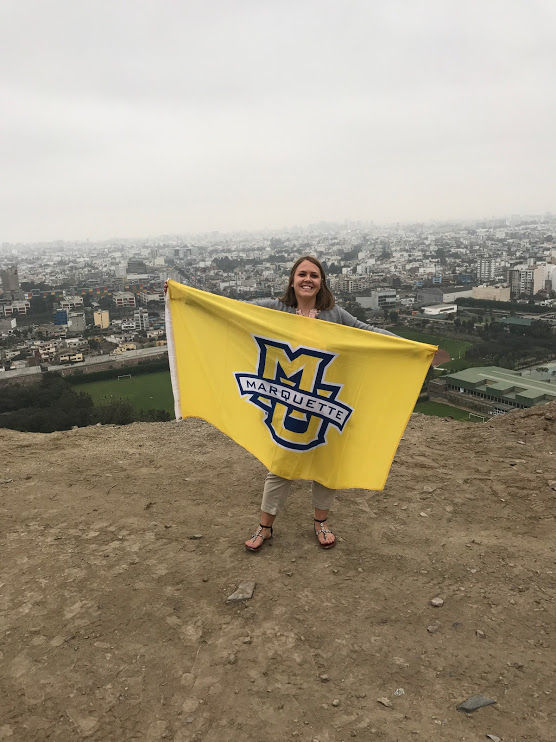
In the afternoon, we got a visit to La Inmaculada, the Jesuit school and high school in Peru. We got to see a classroom at the end of the day where the students were learning English and received a tour of the school. La Inmaculada has access to many resources and is right between a wealthy neighborhood and the wall of shame. The wall of shame separates a wealthy neighborhood and an impoverished neighborhood that the school works to create a relationship with. They also have a zoo on their campus that they said were endangered animals from the jungle. They told us that they were rescuing them and that a Jesuit began the zoo, however, I think that they would have done much better in the jungle or in a larger living space. We also got to see the water plant that they had on their campus. We took our tour bus up to the top of the hill that the plant was on to see where the water is recycled and used for their green grass and fields. It was a great view of Lima, although it was foggy and you could not see the whole city.
Tuesday, we got to observe in a first-grade classroom at a public school in La Victoria. The students were all very excited to see us and drew each of us a picture. The kids loved talking about my family and I got to learn a lot about them too with the little Spanish that I know. We also got a chance to play duck, duck, goose with them and do puzzles. We all had a great time and they were so friendly and welcoming!
As we have observed quite a few schools during our time in Lima, it is hard to pinpoint exactly what “high quality education” is. However, we know that high quality education is whatever sets the children up with the most skills to be successful. For example, Brighouse believes that students should be engaging in critical thinking, flourishing, and learning cooperative capacity in the classroom. In these aims that Brighouse points out, the students are developing in every way. They are learning how to think through different situations, how to work well with others and how to be successful in the classroom and outside the classroom. We know that high quality education should provide the students with all the tools that they could need in their tool belt to be successful.
While a lot of Brighouses aims are applicable to every classroom no matter location or socioeconomic status, it is not always the same for all students. For example, if students live in different locations and have different cultural expectations, then there are different aims to education. For example, for a school in an area like El Augustino, a high-quality education focuses on creating a respectful and peaceful community where everyone can belong. It might focus more on responsibilities in the local community and within the family, rather than larger scale, like Lima. A school like Colegio Roosevelt and La Inmaculada, however, might have aims to focus on building relationships and making change with the larger Lima community and might have more of a drive to achieve higher education based on the teachers and community that they are surrounded with. Often it is students in schools with a higher class that are pushed the hardest and encouraged to achieve all that they can.
While high quality education is not always the same for all students, it should be as much as it can be. For example, students who live in areas like El Augustino should learn how to create a peaceful community and home, yet, they should also be pushed to reach their highest potential and eventually continue into secondary school. I do not think that socioeconomic status should play a role in defining high quality education. I believe that every student deserves to be well equipped to reach their highest potential. They should be encouraged to collaborate, flourish, have autonomy and think critically no matter what their class is. Just because someone has more money does not mean that they are more deserving of high quality education compared to other students. While there may be a lack of monetary funds in some schools, teachers and administration should do their best to ensure that every student is receiving the highest quality of education possible. It may not be easy, however, that should be our end goal!
At the top of the water plant at La Inmaculada:
Friends from La Victoria:

Comments